

In the past weeks, I have resumed my attempt to learn the Spanish language. This time I have found a special resource - Destinos, a TV series to teach high school classrooms and adult learners Spanish speaking and listening skills. This telenovela, or Spanish soap opera, is a series of 52 half hour episodes. The drama introduces the language as used in everyday situations by native speakers while learners are following an intriguing story.
It was produced by WGBH Boston back in 1992. It is available for free on learner.org for now. Sadly, after running the educational service for decades, the website is announced to shutdown on July 1, 2026. I hope the materials will be adopted by others.
I always think drama and stories are great teaching tools as opposed to text books or classroom learning. This works for foreign languages too. Spanish often perplex learners with numerous variations of forms for verbs as simple as “to be”. One example is “era” (was). Typically, we have to memorize them and drill them with endless exercises. Here in this scene, he said “Era mi amigo” (He was my friend). For me, “era” will be strongly associated with this scene. It will no longer be a random word I have to painstakingly memorize.
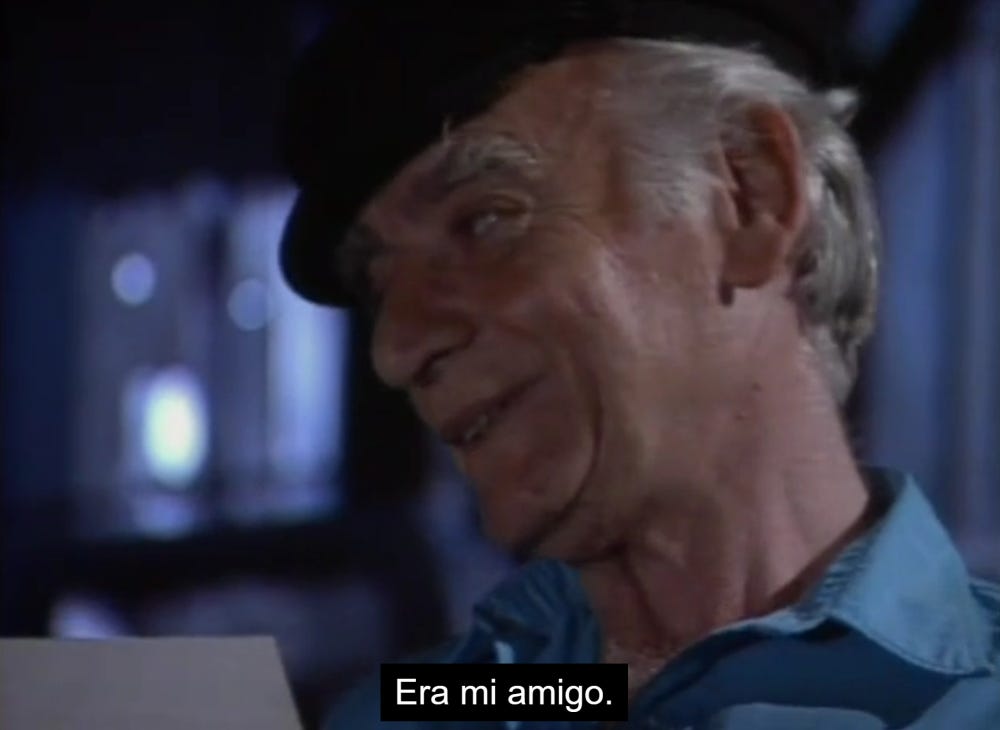
Compared to a text book, this line has a context. In addition, there is an emotional connection. The plot was about a search for a long lost brother. They went to his old place, asking any people if they knew his brother. One after another, they all denied. At the long last, they found the man Hector above. Not only did he know his brother, he remembers him affectionately as his friend. This line is a big emotional relief.
While entertaining, telenovela is not expected to be any awarding winning classic. It is a drama nevertheless. There is a plot, key characters, and a mystery to be unfolded. The plot would sustain our interest for us to go through 52 episodes of learning materials. Perseverance is necessary for the success in learning a language.
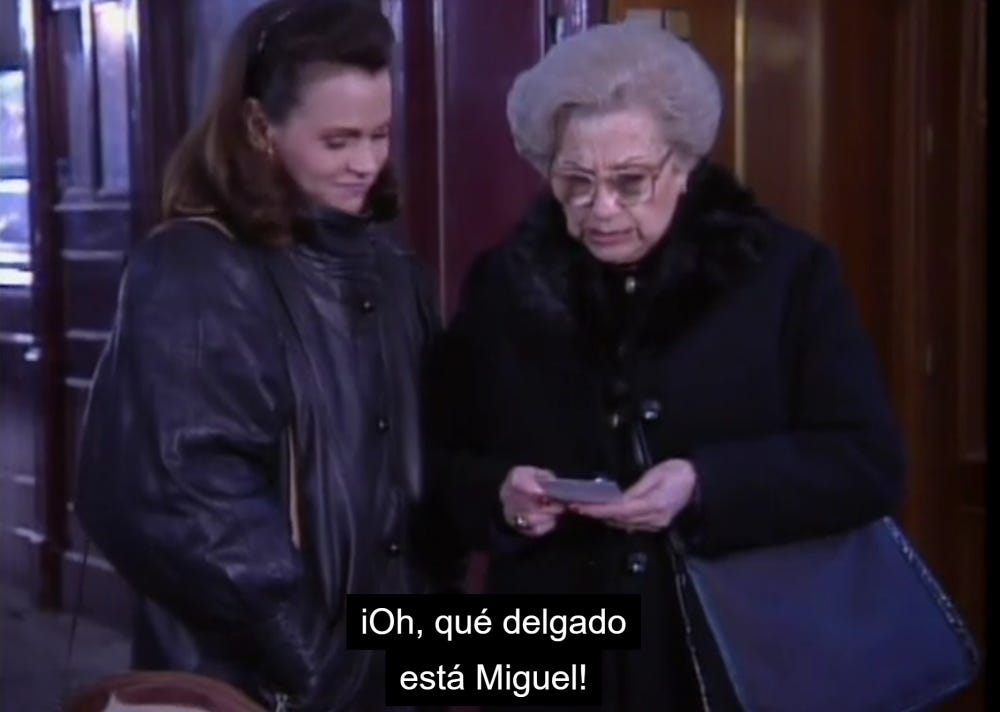
Another scene I like is Señora Suárez, seeing the picture of her grandson, spontaneously making comments about his appearance (Miguel is so thin!) Often we learn vocabulary individually from text book sentences. In this case, she spoke fluidly of several vocabularies in a series of sentences in a real world conversation. This makes the words alive.
I was also smiling when I saw this. Don’t all grandmas do this? They can’t help but make many comments about the children and their appearance? It seems that this is a cross cultural archetype we can all recognize.
I am about one quarter through the series. I started to be able to hear a good deal of natural dialogs (fast speech compared to classroom dialog). And I look forward to seeing the story unfold.